

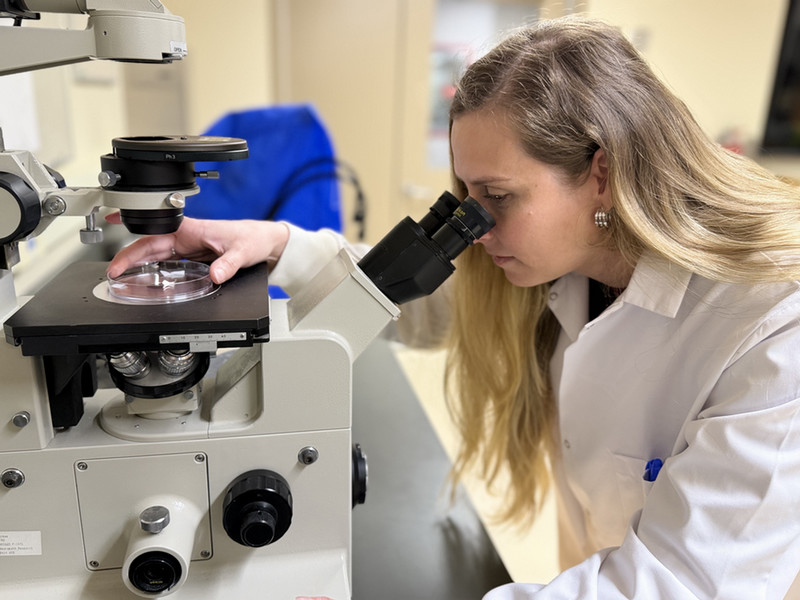
USask Dentistry launches fully funded PhD cohort
The College of Dentistry is recruiting six fully funded PhD candidates to begin in September 2026.
By Duane KripThe University of Saskatchewan (USask) College of Dentistry is creating new opportunities for aspiring researchers with the launch of a special, fully funded PhD cohort in its Precision Oral and Systemic Health (POSH) program for the 2026–27 academic year—an initiative that reflects the College’s rapidly growing global research profile.
The College is recruiting six fully funded PhD candidates to begin in September 2026. In a notable departure from traditional admissions models, applicants are not required to secure a supervisor prior to applying, thus making the program more accessible to top candidates from diverse academic backgrounds.
The timing of this initiative aligns with the College’s continued rise on the global stage. In the latest Shanghai Global Ranking of Academic Subjects, the College advanced into the 101–150 category worldwide in Dentistry and Oral Sciences, an improvement from last year’s 150–200 range. Among Canadian institutions, it now ranks fourth, underscoring its growing national and international reputation.
“This cohort model reflects our commitment to reducing barriers and attracting exceptional trainees from diverse backgrounds,” said Dr. Daniela Pita, Academic Director of Graduate Studies. “At the same time, our continued rise in global rankings speaks to the strength of our research environment. By providing full financial support and a collaborative, mentorship-driven setting, we are empowering students to contribute to research that is gaining recognition worldwide.”
The POSH MSc and PhD programs are designed to prepare trainees to lead high-impact research at the intersection of oral and systemic health. With a strong emphasis on precision technologies, innovation, and translational outcomes, the program equips students to tackle complex health challenges with real-world impact.
Students benefit from hands-on experiential learning in a collaborative environment. Research strengths span dental materials, salivary diagnostics, advanced imaging, proteomics, oral microbiology, and public health dentistry, alongside emerging areas such as artificial intelligence in dentistry, infection prevention and control, phototherapy, stem cell biology, and regenerative medicine.
Roana Leite, a current POSH MSc student said she was drawn to the program because of its focus on the interrelationship between oral health and systemic health. “My experience so far has been very positive and has met and, in many aspects, exceeded my expectations” said Leite. She adds that “the program provides access to excellent laboratory infrastructure, advanced equipment, and a wide range of resources. In addition, the faculty members are highly qualified and supportive, which has significantly contributed to my academic development.”
A defining feature of the program is access to state-of-the-art infrastructure. Trainees work in advanced laboratories equipped with technologies including mass spectrometry, 3D bioprinting, infrared imaging, flow cytometry, fluorescence-activated cell sorting (FACS) microscopy, RNA sequencing, and advanced 3D imaging systems. These facilities are complemented by cutting-edge clinical and educational environments that support both discovery and translation.
By integrating innovation, interdisciplinary collaboration, and clinical relevance, the POSH program positions graduates at the forefront of a rapidly evolving field. The launch of this fully funded PhD cohort not only enhances training opportunities but also reinforces the College’s trajectory as a rising leader in oral health research, both in Canada and around the world.
Students wishing to apply can go to: Precision Oral and Systemic Health - Future graduate students | University of Saskatchewan
Application deadline in May 15, 2026. For more details, contact dent.grad@usask.ca